Cold As Ice: Update #3, The Posse

This series began with its first post February 4. Updates quickly followed: #1 on February 6; #2 on February 9. Now we are ready for Update , the deputizing of college campus police to enforce immigration law.

How fitting that when we think of undocumented immigrants coming across the southern border, we think of the American West with its images of deserts, sand, river gorges, buttes, cowboys, cattle, shallow rivers, watering holes, cottonwood trees, and bluebonnets. I suppose I should mention tumbleweed as well, an illegal alien from Russia, that invaded in the latter half of the nineteenth century, but well, tumbleweed is Russian so that illicit crossing of our nation’s borders is probably okay with the Trump administration.

Part of that nostalgic view of the West is the traveling judge holding court in the local saloon to deal out justice according to his idea of the law. Attorneys not being around, frontier justice was presented as a rough sort of justice enforced by a local sheriff and the men he chose to deputize.

Completing the picture was the outlaw, sometimes a loner but often part of a gang. The sheriff gathered a posse when outlaws were in the area to ride out and bring them in for whatever justice the sheriff had in mind. Printed posters proclaimed in loud, large letters: WANTED DEAD OR ALIVE.

While it is debatable as to whether that remembrance is more 1950s Hollywood than the historical reality, what is not debatable is that vision underlies the deputization of local police and other law enforcement agencies to act as ICE agents under deputizing agreements.
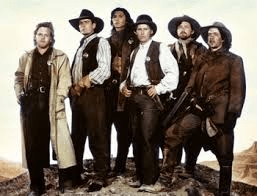
From a TV show.

Florida (state motto: where every bad idea is born) leads the way. The governor, senate president, and house speaker had squabbled over what to do when the governor called a special session to ramp up immigration law enforcement. In the end, during a succeeding special session, they enacted a law to force local law enforcement to assist with ICE and immigration enforcement by screening individuals for their status when they are detained or pulled over for a traffic stop.

This effort has now reached Florida’s college campuses. Florida Atlantic University, University of South Florida, and the flagship campus University of Florida are seeking to enter into deputy agreements with federal authorities. Other universities are joining them, including Jacksonville’s University of North Florida.

Joshua Glanzer, spokesperson for FAU, said this, “We are simply following guidance from the Governor’s Feb. 19 directive to state law enforcement agencies, of which FAUPD and other state university police departments are included.”

Under a 287(g) task force model, such as the agreement being pursued by the University of Florida, participating officers would have the authority to interrogate “any alien or person believed to be an alien” about their right to remain in the country, as well as the power to make arrests without a warrant in some cases.

https://www.news4jax.com/news/florida/2025/04/14/florida-universities-to-deputize-campus-police-for-immigration-enforcement/

Students have a different viewpoint from their universities. This new ability is making them feel unsafe and unable to participate in normal campus activities or access other campus resources students need like counseling or health care.

ICE says racial profiling is forbidden under its guidelines for local law enforcement, but let’s tell the truth. Racial profiling is a characteristic of the new administration’s policies overseen by Stephen Miller, Deputy Chief of Staff.

One worries that she could be pulled over on the flimsiest of excuses because a campus officer may decide that she doesn’t look like she belongs here, i.e., in the U.S and will be detained. What will happen then? (As if we don’t know.)

She cannot be the only one.

But the officers are being deputized and their posse is riding to root out undocumented immigrant students. This is the new reality descending upon Florida’s college campuses.
On Tyranny: Lessons for Educators 11

Reflections on the short yet deep book of Timothy Snyder.

Investigate. Figure out things for yourself. Spend more time with long articles. Subsidize investigative journalism by subscribing to print media. Realize that some of what is on the internet is there to harm you. Learn about sites that investigate propaganda campaigns (some of which come from abroad.) Take responsibility for what you communicate to others.

Back in 2011, Florida enacted a law requiring teacher evaluations to be based on test score data and eliminating ‘tenure’ in favor of annual contracts that could be non-renewed for any reason or no reason at all.

Few teachers paid attention until 2014 when the law took effect. At that time, teachers in my building were upset, mad, and demanding to know when it happened. I replied, “Three years ago. I tried to tell you.”

I know the risk of uttering any criticism of teachers, but sometimes we are our own worst enemies. Investigate. Figure things out for yourself. Get active. Understand what’s going on. Raise your voice. Monitor the legislative sessions in your state and what laws are proposed. Your livelihood depends on it. Stop voting for people who want to take away every protection you have. Stop voting for people whose end goal is to demolish the career you have chosen. Stop voting for people who see you as Public Enemy No. 1.


Think about your professional development. You are your own expert. Keep learning; keep striving to be a better teacher, whether it is gaining new content knowledge or perfecting your craft as a teacher.

Subscribe to a few professional journals. Read the magazines your union sends you. It’s not all business or organizing; unions sponsor research into best teaching practices. I have found many good ideas in the publications of NEA and AFT.

Read books. Don’t rely solely on your district for your professional growth. Much of what they do is to enable them to reach district goals, which center on school grades, not what you need to be a better educator.

Be careful of what you find on social media/the internet. There are good ideas and materials on sites like TeachersPayTeachers, but some of it is plagiarized and some of it is schlock. Don’t be lazy; write your own lesson plans even if they are only in your head. Many district lesson plan templates exist to document compliance with legal obligations or district requirements. Don’t be afraid to force the template to record your plan as you intend to teach the lesson.

Responsibility for what we teach is inherent in our professional standing. Justifying bad practice by pointing to the district curriculum is bad practice. The next generation is depending upon their teachers. Let’s not fail them.

On Tyranny: Lessons for Educators 10

Reflections on the short yet deep book of Timothy Snyder.

Believe in truth. To abandon facts is to abandon freedom. If nothing is true, then no one can criticize power, because there is no basis upon which to do so. If nothing is true, then all is spectacle. The biggest wallet pays for the most blinding lights.

Knowledge is gained from a search for truth. While educators cannot hand off a philosophical truth to students, they guide them on their way as they help them to learn about and understand the world they are living in.

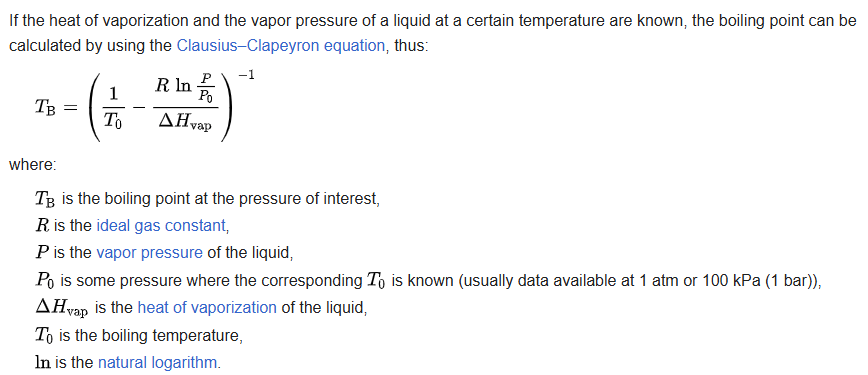
As Snyder aptly points out, we cannot abandon facts. Water boils at 212 degrees … at sea level anyway. At higher altitudes, water boils at lower temperatures. As educators, our job is to help students learn not only basic facts, but understand the nuance that can surround them.

Good ol’ science working out how to know water’s boiling point with all the variables involved.

Facts combined with nuance in their application becomes truth. Truth without underlying facts is useless and most often is a form of falsehood/propaganda. Pilate famously asked Jesus, “What is truth?”

Educators help children find it. With the truth, democracy and freedom are preserved for another generation. That is why education is under an onslaught to destroy it or remake it, especially America’s universities. Those who would replace our democracy with an autocracy want to suppress all criticism.

Why is it that the most heated conflicts over schoolhouse curriculum is social studies? Why are certain truths regarding the treatment of Black people, indigenous people, and others being removed in favor of a one-sided story glorifying white superiority? Why can’t we tell the full story of America, the good, the bad, and the ugly?

Because power does not want to be criticized and because power uses fear to suppress ideas that compete with its ideology.

We, as educators, need to equip students with the skills they need to question and critique what Kellyanne Conway notoriously dubbed ‘alternate facts.’ We need to equip students with the skills they need to articulate truth with the facts that underly it.

Otherwise, all is spectacle. Sports, Friday Night Lights, concerts, and plays are an important part of school, but if there is nothing else like literature, mathematics, and science plus history and civics, then they become only spectacle. Together, the electives form an essential part of the curriculum; alone, nothing but spectacle.

Ancient Rome was comprised of a few oligarchs (the senate), an emperor (actually, a military dictatorship with hereditary succession,) and the masses of workers and slaves. There was a reason Rome provided the masses with bread and circuses. The empire lasted longer than the original monarchy or the republic. The emperor had the biggest wallet and arranged for the most blinding lights. Those lights kept the masses from revolting.

As educators, our duty is to help our students turn down the lights and see the stars that twinkle in the sky and will continue to shine regardless of what we do to our society. That is a truth that will outlast us.

On Tyranny: Lessons for Educators 9

Reflections on the short yet deep book of Timothy Snyder.

Be kind to our language. Avoid pronouncing the phrases everyone does. Think up your own way of speaking, even if only to convey that thing you think everyone is saying. Make an effort to separate yourself from the internet. Read books.

Take that, Science of Reading*! Read books.

Up yours, Achieve 3000**! Read books.

Forget your shortcuts, Cliff Notes and the online/digital knock-offs! Read books.

As for you, Sal Khan*** … read books.

Read books.

Several years ago, my district decided to change the ELA curriculum. They bought a boatload of paperback novels for teachers to use. Because of budget restrictions, they only bought enough for each teacher to have a classroom set.

The students did not read the novels in full. They read excerpts and then tried to answer questions as the Common Core had taken hold and reading a full book for the enriching experience was something schools no longer had time for. The district specialists who designed the program couldn’t understand why children would want to read a whole book.

BUT THEY DID. The selected books must have been interesting because the ELA teachers reported in team meetings that the kids were begging to take the books home so they could read the entire story.

Nope, nope, nopity, nope. The teachers couldn’t let them borrow the book, not even overnight. Maybe it was some of the language. One teacher reported that her students loved the F-bombs in the text only to be told she was supposed to direct the students to read around those parts.

Out of touch doesn’t begin to describe it. That’s why the best instructional coaches tried to teach summer school–they wanted to keep the actual classroom experience real. The district of course had other ideas. They did not look at summer school as an educational experience for teacher and student; they thought it was a reward for teachers to give up their summer break to earn a few paltry dollars. The district showed their true colors when they cut fully funded positions because the enrollment did not meet projections.

Back to the point. Read books in their entirety. Let students read a full book; require it. Immerse them in the text, the story, and their imagination.

If you don’t, stop griping about falling performance. Do the right thing. Read books. Let the students read books and you will get back to the rest of the lesson that everyone of us, including students, needs to develop our own voice.

That means reading, but not scrolling down the social media feed.

That means reading, but not posting the funny meme that five thousand people have already shared.

That means to read books and then, in your excitement, share quotes or takeaways.

Read books.


*Science of Reading is a movement to teach elementary school children using phonics as the primary and sole method. For background information, read Nancy Bailey or Tom Ultican.

**Achieve 3000 is an online test-prep program for middle and high school students in which they read excerpts and answer questions.

***Sal Khan created Khan Academy, an online edutech program and product. He might have had the best of intentions when he started it but has since fallen into a reformster mode, particularly in steering the program toward participation in College Board exams and the use of AI.

Good Evening, Jacksonville! Final Notes from NPE

I’ll be traveling home tomorrow. Today’s sessions focused on justice and fairness for all. I don’t have many notes to share, but that gives me some space to give some overall impressions.

If I was You-Know-Who, I would want you to feel cut off … because if it’s just you alone, you’re not as dangerous.

One thing I heard many times this weekend is how people have been feeling alone, fighting the good fight, but alone. I must confess I have been feeling like this, too. So much of what everyone is doing seems to have no effect. That’s what the privatizers want us to believe. They are winning; we are losing.

So, if for nothing else, conferences like these are essential (not important as one presenter stressed. Public schools are not important; they are ESSENTIAL.) They allow us to reconnect with like-minded persons and realize more than that we are not alone, but there are more of us than of them. This conference re-energized a lot of people who have been doing the hard work, good work, and I felt re-energized standing among them.

There were more tips about cultivating relationships with local reporters to pitch stories that matter and amplify stories about education when found. Tips about cultivating relationships with legislators even if they don’t want to see a defender of public ed coming. Tips about finding existing advocacy groups to join. We don’t have to do it all by ourselves.

I attended a session about justice for the disadvantaged. It began with a session about the Willowbrook School on Staten Island, which existed to institutionalize children with disabilities, and the terrible conditions found there. The woman who presented the history shared that her mother worked there and blew the lid off with the media about the terrible conditions.

That was before the IDEA act and the movement in the 1970s to close the institutions and to provide the services disabled children need to allow them to participate as much as they are able in public education and the workforce. (Personal note: listening to someone recount how bad it was and show pictures brought tears to my eyes.)

What we have achieved since then is important: providing opportunities and dignity for everyone regardless of how they started in life.

In another session, Derek Black talked about the history of literacy and how the suppression of Black learning hurt the South, both Black and white alike. His new book is Dangerous Learning: The South’s Long War on Black Literacy. He is also the author of Schoolhouse Burning, Public Education and the Assault on Democracy.

I have not read either, but I will be soon. I hope the Jacksonville Public Library has copies available.

As the moderator said, “History does not repeat itself, but it echoes through the ages.”

The conference wrapped with a keynote address by Tim Walz, who encouraged everyone to keep doing what we do: educate the public about what is at stake. His message was that he knew he was preaching to the choir, but the choir needs to sing louder. He said we would lose a lot in the years to come, but power will shift and we can build back better our institutions.

Randi Weingarten, President of the American Federation of Teachers, introduced him. She gave us this–there is a shift taking place. Democrat and Republican alike are opposed to the fundamental destruction of our federal government and the services it provides that we need. We must never say, “I told you so.” We must focus on building coalitions of the middle class, the working class, and the poor because people, all people, are seeing that their lives are under threat.

Together, we are many. We are not alone.

Hello, Jacksonville! More Notes from NPE

Sorry, I didn’t post last night about the afternoon sessions. It was a long day beginning at 7:30 in the morning and lasting until 8:30 at night. All I had time to do was fix a few typographical errors in the previous post.

Highlights from Connecting the Fight for Democracy to the Fight to Save Public Education:

Democracy is learrned in the classroom. Sometimes formally in the curriculum, but also in how the classroom functions: how teachers establish the ethos to guide its function, how peers interact with one another, and how the adults react to those peer interactions.

Good schools cannot teach democracy alone and achieve societal goals; investment in the community is needed as well through the provision of means to achieve health care, eliminate hunger, etc. Anti-democratic forces know this and want to eliminate both.

Converting federal involvement into block grants takes away the federal government’s ability to specify rules and conditions that worked to achieve fairness and equity. Dismantling federal agencies does the same.

It is futile to meet this moment with past practices and strategies. We must build a movement of the many to not only defend, but improve local schools and government services. Don’t defend general ideas or institutions. Focus on individual impacts. Reach out to win over the one-third of the electorate that did not vote.

Highlights from Flipping the Conversation and Changing the Narrative:

No one will be persuaded if they are given facts and figures–storytelling is the key. Know your audience, establish a common language, provide a clear, coherent, and cohesive story that has emotion; also, don’t memorize or improvise, but practice the story and act natural.

E.g., ask people how many days of schooling do their children lose if a state adopts a certain law or policy? Four? People will react because it has become personal to them if a policy costs their children days of learning.

Change from talking about the vehicle to talking about the destination. Shift from discussing a policy to exploring the policy’s impact on the audience. Put faces on the policy changes. Who was affected? What’s their story?


Don’t qualify or condition statements. Say the thing, have passion over polish, and don’t run on. Too much detail buries the message.

Name the villain. Who is responsible? Be direct and focus on a common enemy, which does not have to be a person. Avoid passive language.

Utilize social media platforms. Be simple and consistent, but vary the content of what is posted. Engage with people to grow followers. Learn how to use the different platforms.


Get to the why, i.e. who has controlled the legislature and school funding when people talk about bad schools and low test scores. Be a truthteller. Show up. Give your testimony. Don’t overlook any area or group of people, for example, rural Americans.

Put out reports. Bring media attention and develop relationships with reporters and journalists. Use charts and graphs to make things easily understandable. Attach the report to real people. Provide fact sheets and stories. It’s an all of the above strategy.

Don’t overlook AI and put your content on the internet. Use AI to pick up the content and provide it when people are using AI and chatbots to find information. It will use the content in its results.

Thank the media for the stories it reports when it provides a positive message for schools. Comment on stories; submit questions.

This isn’t polished content but a quick summation of all I learned yesterday afternoon. We have more sessions today and close out with a keynote address by Governor Walz. I’ll provide a final update late this afternoon. Have a happy Sunday!

Hello, Jacksonville! Notes from NPE

I am currently attending the Network for Public Education conference in Columbus, Ohio. Here are some notes of interest from the sessions I attended this morning.

I. Strategies for School Board Elections.

Avoid an ‘us versus them’ mentality. Approach voters and community members with something like “Can we agree that strong public schools benefit our community, city, and district?” Emphasize that regardless of the choice of school a parent makes, the anchor that public schools provide to their communities is essential to the stability and wellbeing of their communities.

Fundraising is difficult. One panelist said that she would handout lists of 20 addresses to people who supported her but couldn’t make a donation. She would ask them to write a message, spring for the stamp, and send the cards. Elections are expensive with the costs of advertising and mailers.

Once a candidate declares they are running, they will be met with an onslaught of lies and deception about who they are. Unless countered, people will believe these messages. One panelist said she sat at her kitchen table and made a video for online sharing about who she really was: a parent, head of the PTO, and community member. “Do I seem like the person the opposition groups are making me out to be?” Another went out door-knocking every time a new mailer was dropped so people would realize she wasn’t the crazed fanatic she was made out to be. In both cases, they won their elections.

It takes time to win elections. If someone wants to run, start early to have time to organize and build a campaign, especially with acquiring staff. Finding skilled campaign staff can be difficult.

II. School Closures.

The playbook we’ve seen in Duval County is the same as the playbook being used all over the country. The panel began by asking us how many have heard of declining enrollment and budget shortfalls. Everyone raised their hand. Then, how many of us have had schools closed in the last two years. Everyone raised their hand. Finally, how many of us have planned closures coming in the next two years? Almost all of us raised our hands.

They outlined the strategy:

  1. The school district raises the issue of declining enrollment and budget concerns.
  2. A consultant is hired (from a limited group that operate nationally and make this their specialty) to develop a plan.
  3. The consultant creates a list of schools to close.
  4. The public finds out about the consultant and the plan, but has a short time to organize and fight the plan. (This one really resonated with me because I went back through school board minutes and workshop agendas to find out when the Duval consultant was hired. I couldn’t find the meeting where a contract was approved. The panel talked about how most of work done by district staff is done in secret.)
  5. The school board votes to close schools.

Often, budget presentations are made without detailed, supporting data or context, but with a presumption that closing schools will save money. Many times, that presumption is not verified through analysis.

One audience member pointed out that school systems who have lost their enrollment (e.g., Columbus, Ohio had 110,000 students in 1971 but currently has 46,000 students) combined with the accompanying budget shortfalls cannot sustain the number of schools that they once needed.

This, of course, is true of Duval, one of the reasons I have not written or worked in this area. Closing schools is an emotional wrench for the parents and communities. I will not have the hubris to think that I know which ones should close and which ones should stay open. But this session has opened my mind to looking at the problem in other ways.

School property is valuable property. Developers push the failing narrative to get their hands on it. Even now, a bill is in the legislature to force Florida districts with schools that do not meet an enrollment threshhold (I believe it’s 50%) to turn those schools into senior residential living, community centers, or charter schools. These options would require renovation and that gets private developers in the door.

The panel proposed a change in the mentality–districts should stop managing decline and focus on growth with a community school concept in mind. I heard mention of Cincinnati, which utilizes portions of their school buildings for community needs like dental clinics and meeting space for community organizations. I haven’t had time to research this as I mention it in passing.

Boards, superintendent, parents and community members need to organize and work together to accomplish the following:

  1. Pause school closures
  2. Engage the entire community
  3. Develop a plan for growth that matches the growth of the area
  4. Keep, not sell, school buildings.

Choose targets wisely, that is, those with decision-making power. Use the media to change the narrative. Shape popular decisions.

That’s it for now. Afternoon sessions are starting. I’ll report what I learned later tonight.

On Tyranny: Lessons for Educators 8

Reflections on the short yet deep book of Timothy Snyder.

Stand out. Someone has to. It’s easy to follow along. It can feel strange to do or say something different. But without that unease, there is no freedom. Remember Rosa Parks. The moment you set an example, the spell of the status quo is broken, and others will follow.

Speak up for students. Someone has to. It’s easy to pretend they are data points and these days, it can feel strange to do or say something different. Do it anyway. Break the spell. Let others follow even as you know many will not. But why should that stop you?

Every teacher who has worked in a public school setting has sat through dreary meetings that endlessly chew over student test results (code word: data,) that promote the trick-of-the-month (code phrase: admin spent school money to go to a conference and has to justify the expense,) or that require teachers to do nothing more than keep their mouths shut as district personnel tell them what to do (code phrase: I hate kids. Never going back to the classroom.)

Speak up for the students. Keep it professional; don’t give in to the impulse to make it personal or get upset. Stay focused on what counts–>student learning and growth, true learning and growth, and dismiss the flawed proxy of test results.

As said in a previous post in this series, this doesn’t mean being combative or going postal. It means speaking up when it’s needed.

Many years ago, I sat in a shared-governance meeting and one of the topics was student tardiness to class. Lots of brainstorming took place along punitive lines. What do we do to students when they are late to class so they will be on time?

I wasn’t a member of the committee and sat silently until the debate reached a lull. Moreover, this was my first year at this school. My goal that year was to keep my head down and build relationships in the building. But I raised my hand. “Am I allowed to speak?”

The chair, a fellow teacher and building rep for the union, said yes.

“Let’s look at gym class. My building has planning that period. The P.E. teachers send the students into the lockers early enough to shower and change and then wait for the bell to signal the next class. Except we have turned off the bells.

“They don’t know when to go to class. There’s no clock in the waiting area. Some of them come into the building only to be yelled at that it’s not time yet and go back to the P.E. area. They comply.

“Waiting around, they do what kids do: play, gather in groups, talk, laugh, and horse around. They are not keeping track of time and again, there is no clock for them to look at.”

“Then, someone yells at them to go to class. They are late. Teachers grumble and threaten referrals for being tardy. But how are the students supposed to know that?”

It’s not easy for me to speak up and confront people. I’m not psychologically built that way. It’s a lot easier to write and post 🙂 But somebody had to say something.

My last principal took note how my nervousness showed through in the sound of my voice. But in his view, that gave me authenticity, what I was willing to suffer in order to speak an unpopular view. It gave me more authority, not less, as an educator speaking out for students.

When somebody has to say something, stand out. Be that person. You may not have an appreciative administrator, but do it anyway. Set the example, break the spell, and see those who will follow.

P.S.: After that meeting, many people came to me to express their appreciation for what I said regarding the tardy students. The most common comment was, “Awesome.” Others do follow.

On Tyranny: Lessons for Educators 7

Reflections on the short yet deep book of Timothy Snyder.

Be reflective if you must be armed. If you carry a weapon in public service, may God bless you and keep you. But know that evils of the past involved policemen and soldiers finding themselves, one day, doing irregular things. Be ready to say no.

I don’t know when School Resource Officers showed up in high schools, then middle schools. I do remember when my district’s SROs were given elementary schools to which they would pay random, unannounced visits. That was in the aftermath of Parkland, which took place in February 2018.

The role of the SRO is to enforce the law. In reality, the SRO has a wider role within the school. The best ones use their presence to be visible among the students and cultivate positive relationships. They work with the principal even though they have their own chain of command to answer to. They add another layer of safety when they are doing the job right.

SROs play a detrimental role when they do things like introduce themselves to the faculty by an email announcing that everyone is breaking the law in the way they make a left-hand turn into the parking lot with a citation of a non-existent city ordinance. Also, if they approach their job by sitting in their office all day.

As the law enforcement contact on property, they play a crucial role in determining when to arrest students and assessing threats.

However, because they possess a weapon of lethal force, they must be aware of when its use is necessary, how they would recognize those circumstances, and think ahead about how they would react. We assume that is a part of the rigorous training they undergo.

But what happens when they have to interact with other agencies? With the current administration authorizing ICE agents to go into schools, SROs have to be ready to say no and refuse cooperation if the agents are acting unlawfully.

A few short years ago, state legislatures were enacting laws to allow teachers to carry guns. For any teacher in one of those states who now carries, ponder the words of Timothy Snyder. Why are you armed? When would you draw your weapon? Under what circumstances would you fire your weapon and at whom?

Could you ever find yourself doing “irregular things?” Are you ready to say no?

Search deeply for the answers. There is no human deceit as great as that of self-deceit.

On Tyranny: Lessons for Educators 6

Reflections on the short yet deep book of Timothy Snyder.

Be wary of paramilitaries. When the men with the guns who have always claimed to be against the system start wearing uniforms and marching with torches and pictures of a leader, the end is nigh. When the pro-leader paramilitary and the official police and military intermingle, the end has come.

We need to rewrite those first sentences to make an analogy for educators. After all, no extralegal authorities are strolling our schools’ hallways–at least, not yet.

Be wary of astroturfed community groups. When the people with a political agenda who have always claimed to be against public schools start wearing the same t-shirts and showing up at school board meetings marching in lockstep, the end is nigh. When they take seats on the school board and hire like-minded superintendents, the end has come.

Oh, Duval! You are low-hanging fruit for this post. But I have bigger fish to fry. Lest you think that’s a mixed metaphor, feast your eyes on this.

Yum?

Moms for Liberty, anyone? Other groups who use the public comment portion of a school board meeting to tag team a reading of passages from a book they consider obscene? But they are not satisfied with performative politics on the outside.

They are running for office. Most places, a few individuals may win, but they don’t grab control of the school board. In some places (Duval, cough, cough) they find success.

When federal and state authorities conspire together to castrate their respective Departments of Education, the end has come. Linda McMahon is such a disappointment. Given her background in the pro wrestling biz, we know the outcome is scripted but at least there should be a good show.

Kitty litter boxes for furries, slandering teachers as groomers and pedophiles, and faking outrage over the issue du jour, they are riding their high horses into positions of power.

We are left to ask, “Has the end come?”

You know the answer.