Pro-Choice?

Time was, this phrase aroused passions like no other as the culture wars raged throughout the 1970s, 1980s, and 1990s. Time has passed through the aughts into the teens of a new century, and the phrase still arouses great passions although in an entirely different theater of the culture wars.

In education, choice means parents have multiple options for the enrollment of their school-age children. It is not the existence of choices that is controversial. Parents have always had a choice. Private schools have existed since the immigration of European colonists. Public schools began when townspeople banded together to hire a teacher for the village children. Parochial schools began when the Catholic Church grew concerned that Catholic children would not grow up in the Catholic faith.

Public schools grew into larger systems supported by citizens through school taxes. As such, it was the free option parents had. But there were always choices.

The controversy comes because now some advocate to take the public tax dollars and distribute them among all the options, traditional public, charter, private, parochial, online, and home schools.

The controversy is heated because there are many dogs in the fight over the bones that have not increased. More dogs, same number of bones, the competition is fierce.

Each side, there are many, has supporting arguments, moral principles, constitutional appeals, and valid philosophies. But in the end, we are fighting over a limited supply of public dollars.

How do we use those dollars to get the most value for the most children?

Or should we even bother with that utilitarian argument?

The desire for school choice, no matter how carefully constructed upon a utilitarian philosophy, has nothing to do with that.

Choice is individualism. I decide what is best for my children. While not utilitarian, it is very, oh so essentially, American.

My child, my rights, my choice.

You will not get an argument over a parent’s right to determine what is best for their child from me. Although I am privileged over the course of 10 months to spend more time with their child in my classroom than the parent does at home, at the end of the year, I am done. I fade away. Lots of teachers over thirteen years of schooling; only two parents.

I didn’t carry the child for nine months in my body. I didn’t feel its heartbeat and recoil from its kicks. I didn’t go through the agony of bringing the child into the world and then loving its being more than my own. Making sacrifices through the early years to raise a child the best I could.

So, yes, parents, it is your choice. However, I would like you to make a good one. A little over 100 years ago, the Food and Drug Administration came into being to police a marketplace of tonics and pharmaceuticals that too often offered bad choices.

Bad choices that ruined life and health and blighted the lives of persons who couldn’t sort through the hype and the truth.

Education is crucial for the young. Everyone agrees on that. We also know from the last 20 years that many of the choices parents are offered are not good ones.

We know the devastation caused to children when schools abruptly close in the middle of the year. Learning is an organic process that only succeeds in a stable environment.

The FDA established a process by which trials, testing, and proof of efficacy without dangerous side effects is necessary before a drug is allowed to go on the market.

Isn’t time we established a similar watchdog for education?

That’s a choice we all should make.

Duval Trek

It was a cheesy series and the acting was questionable, but there’s no doubt it touched a nerve in its time. A ratings bust, during its brief run on 1960s television, Star Trek faced cancellation only to have the network brass relent as the petitions rolled in. GOT remembers a time when he couldn’t get on a school bus without his peers demanding he sign another petition.

To boldly go where no school system has ever gone before …

Thursday, December 27, 2018 my local newspaper offered what they called a bold vision for the school system. It featured these points:

  • Safer schools
  • Continue better graduation rates
  • Renovate (and consolidate*) old schools
  • Better oversight for charter schools
  • More vocational education

Why did no one else think of these points?

Are the editorial writers running for political office that they offer us the equivalent of Mom, Chevrolet, and Apple Pie?

We all want safer schools. How do we get there? Do we revert to a no-excuses suspension policy that ignores causes and instigation and tosses out students for a maximum of 10 days with no ATOSS to keep the suspendees off the streets? Or do we embrace a vision of breaking the school-to-prison pipeline and work within our schools and with Melissa Nelson to treat the root causes of student misbehavior before it turns into serious crimes?

What say you, Times-Union?

We all want 100% of our students to graduate. But the Florida State Board of Education has made it much harder with the elimination of the PERT exam as a substitute for the FSA Algebra 1 End of Course Exam requirement.

Should we continue with the test and punish regimes? Even though we recognize its cancerous effects on learning and student curiosity?

Or should we call for elimination of barriers to graduation and free our schools to produce the young adult that the business community demands? Testing is in the way. A bold vision would call for eliminating state testing and find a new means of accountability.

What say you, Times-Union?

We all want a choice. But if we are to provide that choice through state funding (and taxes), that requires hard choices. We cannot run multiple school systems with the resources that are sufficient for only one.

For school choice, more resources are needed and that means more taxes. If we are offered a choice to tax ourselves in Duval County, like a previous measure that passed in Manatee County (yes, that is an indirect reference to the current superintendent) and the ones that passed in November in Palm Beach, Dade, and other counties, will Duval citizens vote for it? Will the editorial board back it? (You know who won’t, T-U.)

What say you, Times-Union?

Our buildings are old and don’t work well for 21st century education. Bathrooms are located outside the buildings where no one can provide effective supervision of students because we have cut paraprofessionals and security personnel who could do that.

Nothing gets painted without a special request. Roofs leak. Student desks need repair.

But the real problem is that the classrooms are too small for what we ask teachers to do.

The tab for capital needs is one billion dollars.

Do we put a tax referendum on the next ballot, Times-Union editorial writers? What say you?

The last two items on your list you did not expand on. It might be you ran out of space because paper has a limited area and, in these days of shrunken newspapers, you couldn’t fit it in much as a student runs up against the maximum word count of an assigned essay.

Maybe you whiffed on better oversight for charters because you knew that is a minefield given the corporate connections of your ownership. You mentioned it, but with no details, there’s nothing anyone can confront you with.

And vocational ed is Mom, Apple Pie, and Chevrolet. Cue the video of flags waving against a background of patriotic music. Everyone wants vocational ed, but the problem is we don’t know what vocations to educate for as traditional trades are rendered obsolete by technology.

Others have offered a vision for Duval, for example, this one: http://jaxkidsmatter.blogspot.com/2018/11/superintendent-green-and-new-school.html

GOT has much on the plate, but in the days to come, may offer one of his own.

Whatever we do, let’s hear those immortal words as we create a strategy for the future: To boldly go where no one has ever gone before.

Winter Break


Sorry, Judy, but for those of us in Public Ed, these sentiments aren’t true. Next year our troubles won’t be out of sight nor will they be miles away.

If the fates allow, we’ll be together soon. (On the unemployment line, Florida teachers?) Until then, we’ll have to muddle through somehow.

Nope, we will continue to fight.

But it’s Winter Break. Time to let everything rest and listen to the song-sung, time-hallowed advice: Have a Merry Christmas. If you don’t celebrate Christmas, substitute your own holiday. It was funny today to hear students wish me a Merry Christmas or maybe a Happy Hannukah. Sigh, the last name confuses them.

(BTW, the p gives it away. Sampson is an English name, Samson a Jewish one.)

Time for rest . Time to recuperate.

Hard times ahead. But they can wait.

Time for rest, teachers.

Die Hard

Image result for die hard

The Parkland safety commission has issued its draft report. Spoiler alert: Teachers should be armed.

The Devos-led federal commission is about to do the same, but they will soft-pedal it in offering guidelines for arming teachers.

Die Hard, teachers. Maybe Hollywood will celebrate you in a film.

The hero myth dies hard. It makes for a good movie, but it has no place in reality.

Every day, two or three minutes before the dismissal bell, I open my door and scan the hallway to make sure it is safe for me to allow my students to leave my room. If a red dot appears on my chest, I will have a brief microsecond to shout to the kids to pull my body into the room and lock down.

Reality.

When the fire alarm sounds, I tell my students to stay in their seats until I go to the door, examine the hallway, and decide it is safe to leave. I would be very suspicious of smoke in the hallway because there is nothing in the hallway that would burn and fill it with smoke.

Reality.

But politicians and people who don’t work in schools don’t know reality. They respond to political passions and the Hollywood mentality of the hero teacher.

In reality, that teacher would be killed long before they could stop a killer.

No crawling through elevators, no background music swelling to a climax.

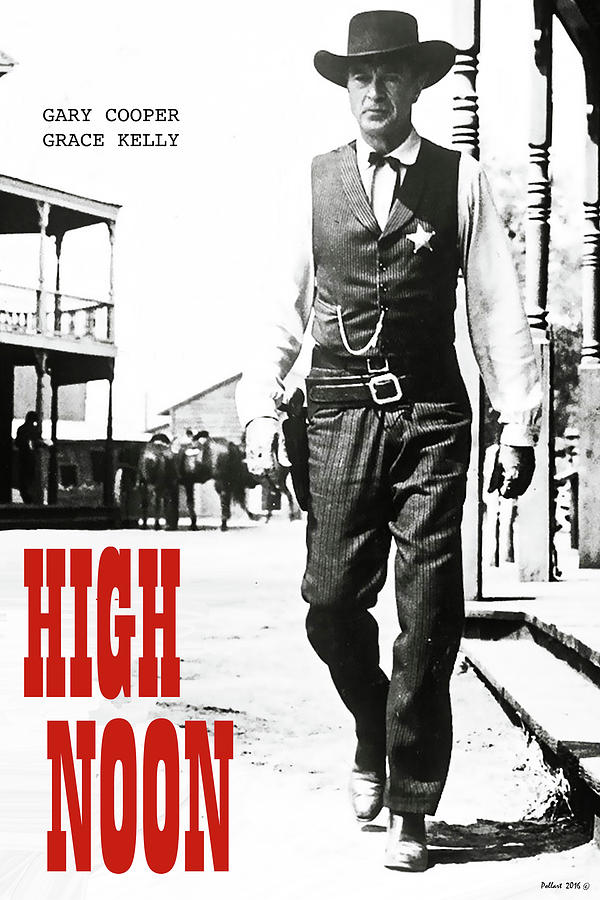
High noon in the hallway. Die hard, teachers.

Or maybe we could get serious about stopping school violence. Maybe we could enact reasonable gun regulations. The second amendment was a political sop even in its day of adoption. The politicians knew that the citizen’s militia was a failure in winning the revolution. Only when George Washington organized and trained a disciplined army with the help of Lafayette, Kosciuszko, and Pulaski (yes, you knew about the Frenchman but didn’t know two Polish generals were also important in advising Washington) was he able to put an army into the field that was capable of outmaneuvering Cornwallis and winning independence at Yorktown.

But the newly independent citizens wanted a guarantee of gun ownership and they got it.

Let’s be serious. You’re not going to stop a Russian or Chinese army storming up your driveway under any scenario with any weapon.

Reasonable gun control laws would allow people to own guns but not with military-grade firepower because that is not needed for self-defense.

Why can’t we agree about this? That would go a long way to eliminating the mass murders we experience every month.

Image result for dumb and dumber

As for arming teachers, there are many issues beginning with liability for school districts. What happens when an armed teacher is jostled in a crowded hallway and the weapon fires? What happens if a teacher has a mental breakdown and pulls the weapon on students? What happens if an armed intruder is on campus and the teacher fails to respond?

We make school a safe place for students. If teachers are carrying guns, even if only one teacher is carrying a gun, school is no longer safe. It becomes one more environment for kids who experience or witness violence to fear it will happen there.

The tragedy of our times is that no one asks a teacher or if they do, they don’t listen.

Teachers say no. They won’t carry guns.

Die Hard may be a good movie, but it isn’t suitable for schools.

Don’t arm teachers.

The Lion, the Witch, and the Wardrobe

A/K/A the teacher, the pearson, and the technology.

Image result for chronicles of narnia

I admit it. I use Pearson’s web-based program in my classroom, Math XL.

Students need practice to master math. The technology allows me to assign them practice without burdening me with a grading load too great to handle. Even better, the program comes with built-in helps for the students: Show Me an Example, Show Me How to Solve This, excerpts from the textbook, and even Ask My Instructor, a feature that allows the student to send me an email with the specific problem they had and the solution they were trying to enter. I can look at the problem and give specific feedback.

I use Math XL for the first 30 mintues of a 90 minute block. During that time, I circulate through the room and help students, sometimes because they ask, sometimes because I look at the screen and realize they need a teacher interaction to solve the problem.

The use of technology doesn’t replace the crucial teacher/student interaction; it enhances it.

At least, the way that I use it.

Yet, I am troubled by the witch. Many persons, teachers, parents, and education advocates, are concerned about the privacy of children and how the data is protected.

For the technology to work, the site has to collect data. If the teacher cannot look at student work and results, the site has limited use. If the student cannot know how successful they were with an assignment, the site has very limited use.

Technology has to collect data. That is not the issue; the issue is how the data-collector protects the user.

Our 21st century counterparts to the 19th century tycoons, Vanderbilt, Astor, Rockefeller, Carnegie et al. and Gate, Jobs, Zuckerburg, Hastings et al., are building corporations to gather data on children from birth in the mistaken belief that the data can be massaged in longitudinal ways to conclude (not predict, they have the chutzpah to believe that data is infallible) what type of an adult the child will become and what the perfect job for them will be.

That is wrong in so many ways that the internet is full of protests against cradle-to-grave data collection.

A three-year-old child throws a toy at another three-year-old child out of frustration given the development of a three-year-old child. It tells us nothing about what kind of person the child will grow up to be.

The problem with the Silicon tycoons is that they know nothing about childhood development and, with the arrogance of wealth, believe they have nothing to learn.

In the lingo, they don’t know that they don’t know. But they make lots of money pushing technology and data collection in education.

Solidarity

Only as one body, one united force of workers and citizens of a country dominated by a Soviet-servile government did Poland stand up against tyranny and do their part to bring an end to their oppression.

The banner they united under was solidarity: one solid unity that would not bend, would not break.

Today, in the United States, we face a similar crisis. There is hot debate among traditional public school teachers as to whether we should unite with fellow teachers working for charter schools, admit them to our unions or support them in organizing their own unions, or stand apart.

There are valid arguments on all sides.

But Solidarity, that unifying cry, should make us all think.

Only in union can we bring the forces of privatization and ruination to heel. Only in union can we fight for fair wages, decent working conditions, and safe schools. Only in union can we fight against the depersonalization of the learning environment.

In union, we can fight together. In union, we can insist that charter teachers have the same qualifications and certifications as traditional school teachers. AND for that, charter teachers should be compensated the same as traditional school teachers, not only in commensurate salary, but in health insurance and pension benefits.

In union, we can stop the Devoses, the Kochs, the Gates, the Zuckerbergs, the Lauren Jobs, the Reeds, oh the list is long, from stomping public education into the ground.

It’s not the fault of charter teachers that they decided a charter gig was their next option. Some teachers pass back and forth during their careers. Some are driven out in small districts so that a charter is their only option for employment.

I have many teacher friends who tried a charter. Most of them are moving from chain to chain as they find each charter less than desirable in the working conditions.

Solidarity.

It comes down to economics. Charters survive and thrive as their business plans work. That means suppressing teacher wages, terrible working conditions, and turnover.

What happens when the teachers organize and strike for a fair deal? The charter become less profitable to the point where the business plan fails, the school closes, and the students return to traditional schools. The certified (qualified) teachers will follow.

Traditional public ed teachers, unionization is the way to end the charter travesty. We need to support our colleagues. Solidarity!

Water is Wet

A white person telling a black person about racism is like telling a fish that water is wet.

Fish know that water is wet. They live in water, they swim in water whether it is placid, turbulent, warm, cold, full of currents that shove them into places they don’t want to go or push them deeper into oxygen-depleted zones, … waters full of plastic they ingest to the detriment of their health … red tide threats that kill them … dangerous bacteria … mercury that stores up in their bodies …

Fish live in water. They have to. They know its qualities and what it means to live their lives in water. They know the impact on their lives and health.

They also know that they must live their lives in the water. To leave the water means death.

Now comes someone who walks on dry land and wants to explain to the fish that water is wet.

That is what it is like when white people try to tell black people what is and is not racism.

Black people know. They spend their lives swimming in it and do not need anyone to explain it. They are the experts.

The Group

I get the research; I have gone to Kagan. Put kids into groups because that’s how they learn.

In my early years, that’s what I did and then experienced the frustration of every teacher of why the groups did not work.

Oh, I assigned the roles: leader, timekeeper, scribe, and so forth. It didn’t work.

They socialized and blew off the work … or one kid did the work and everyone else copied.

Not much learning going on.

I get the research: homogenize groups and focus on the strugglers or blend the groups and let the advanced kids move the strugglers up.

Pbbbt. It didn’t work.

Maybe because kids have different learning styles and in a room of 25, there are too few to blend them right in any way.

In the last few years, I haven’t bothered. I have allowed kids to sit where they want and to form groups if they want. I encourage it, but I don’t enforce it.

The introverted kids who hate being put in a group and will shut down–they are much happier and work at their learning.

The extroverted kids who can choose who to associate with … actually focus on the work, talk about it, and come up with solutions. They are not off task.

(Of course, there is always the cell phone to deal with, but that’s another post.)

Point being, now that I allow students to make the choice, I get better results than when I acted as the Supreme Being who will force everyone to learn as I dictate.

Something to think about.

Bierman v. Dayton

Oh you spammers! Do you really know who I am?!

I received an email asking me to give money to an advocacy group who wants to take an case to the Supreme Court: “You see, the Bierman v. Dayton case would lay the foundation to end one of Big Labor’s biggest and most coercive government-granted powers, so-called “collective bargaining.”

Sorry, National Right to Work Legal Defense Foundation, I am not going to contribute to your mission to make unions illegal.

Background: About five years ago, Minnesota passed a law that said home-care providers could form a public service union. SEIU (Service Employees International Union) was lawfully selected as the union to represent employees who work in that industry. The election of SEIU was challenged because plaintiffs argued that it forced them into an association that they did not want and their constitutional rights were violated. A district court found against them as the plaintiffs were not forced to pay dues to the bargaining agent (Janus rears its ugly head) and were free to form their own advocacy groups if they wished. The 8th District Court of Appeals upheld the District Court’s decision.

That is the case the spammer named above (NRWLDF) wants to move to the United States Supreme Court.

What is shocking is the scope of the decision they hope to achieve: to end the collective bargaining rights of all unions.

If that happens, unions effectively cease to exist.


Full text of the email message:
Mark just gave me a quick call to provide an update on a groundbreaking new Supreme Court case that’s in the works.
And it’s not good.
So he asked me to fill you in right away, Greg.
You see, the Bierman v. Dayton case would lay the foundation to end one of Big Labor’s biggest and most coercive government-granted powers, so-called “collective bargaining.”
Collective bargaining, more accurately described as monopoly bargaining, corrals folks against their will into Big Labor’s ranks.
Not only does it strip workers of their freedom of association by forcing individuals opposed to unionization under union bosses’ so-called “representation”…
… it forces workers into contracts dictated and controlled by Big Labor bosses.
We know from past experiences and victories that legal costs can skyrocket amidst a heated battle at the Supreme Court.
So to be ready to file this writ of certiorari petition and take the Bierman v. Dayton case all the way to the Supreme Court, your National Right to Work Legal Defense Foundation has set a goal of raising at least $120,000 by December 13th.
You see, a positive ruling in the Bierman case would free thousands of families from feeding Big Labor parasites — sucking in people as pawns to push their agenda.
I hope you will dig deep for your most generous tax-deductible contribution right away.

Charlie

I haven’t thought of Charlie in years. He was my neighbor in Boca Raton during my time in that part of Florida. Charlie was in his eighties; I was in my thirties.

We watched each other’s properties when we were away. One summer, Charlie and his wife were on a long vacation so I cut his grass to prevent the city from fussing about it being too high. When the opportunity came, he returned the favor.

One Thanksgiving, Charlie’s wife was away visiting family and two lonely men went out to a local restaurant to share a meal together. At the end, Charlie refused to leave a tip for the waitress because the restaurant paid her to bring our food. I ended up throwing money on the table for the both of us.

Charlie also hated school taxes. He told me that his kids had long passed through the school system and received their education. He hated that he had to pay to educate other people’s children. He believed he was getting nothing out of continuing to pay for schools.

Ah, Charlie. Oh, Florida! There are so many more Charlies than me.

Florida educators believe that if only the voters really knew what the politicians were doing, they would vote them out of office.

The voters know. They do not hold Florida’s politicians accountable for the dismantling of the public school system because they are Charlies. Their children are educated and they do not want to pay to educate other people’s children.

The irony, of course, is that they will continue to pay. The difference is that the politicians are taking a cut in many, many ways: spouses that run charter schools, holding jobs with charter chains, campaign contributions from charter operators that fall into the shadows … Florida has shown no lack of imagination in how to turn its Department of Education into Tammany Hall.

Charlie would approve because he would believe that although he is still paying, he is paying less than if Florida would fully fund the needs of its schools. In fact, even in his retirement, Charlie was always looking for a good return on investment and the charter game would interest him greatly.

He made his money with a truck and a warehouse listening to a police scanner for shipping accidents. Once a wreck happened, he would show up first and buy the scattered cargo for pennies on the dollar.

Then, with the goods in his warehouse, he could take his time to make his deals and profit.

Isn’t that the game plan of Florida’s politicians for Florida’s public schools? Once they can wreck one through a rigged system of testing and school grades, they can swoop in, buy the students and the FTE dollars for pennies, and profit.

But the scale of it is staggering. I bet Charlie wishes he was alive today to watch it … oh, what am I saying? Charlie would be in on it.