Sleight of Hand

Image result for illusionist
Brought to you by the Civic Council of Jacksonville, FL

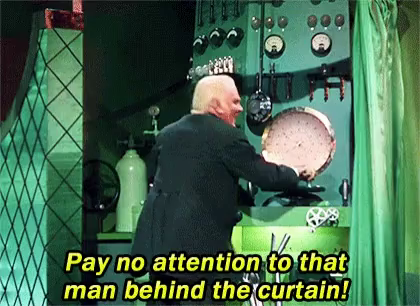
Like a master illusionist, whose expertise lies in diverting the eyesight of the audience from what his hands are doing, the Jacksonville Civic Council’s mouthpiece for education turns up in the Op-Ed pages of the local newspaper to once again perform extraordinary acts of legerdemain, to pull the levers behind the green curtain that no little dog should dare to pull back, to outdo the Barnum of even the Great P.T. himself, to which a weary city can only say, “The Egress is that way –>”

Grumpy Old Teacher (GOT) will not violate the newspaper’s copyright and reprint the entire text of the Op-Ed. If you have a subscription, you can read it here.

However, GOT will give you the summary of the points made:

  • The district should build not to the state standards described as “more expensive and inefficient” that are known as the State Requirements for Educational Facilities standards. They should reduce building quality to that required for any public building that are “just as well-built as public schools.”

GOT response: If that is the case, then why did no charter school volunteer to be a storm shelter during Hurricane Irma? Hurricane Mathew? Is it because the private operators of these ‘public schools’ did not want the liability of caring for stranded persons because they knew their buildings were not up to the strength of the city’s traditional schools?

As for that claim that Florida’s school districts requested that the state legislature passed HB 7055, you had better offer some hard evidence because that is simply not true. Politifact will have a field day with that claim.

  • Use actual enrollment numbers. The Civic Council’s analysis shows that the District wants 8 to 10 more school buildings than is warranted by enrollment trends.

GOT response: Oh, that super special analysis that you have but you share it with no one. If you want us, the public, to take you seriously, you need to send the analysis in all its detail, with accompanying footnotes and citations for the experts you used and the studies you relied upon, to the school board. Then, you need to publish it on your website so everyone can look at it. Otherwise, you are merely a resounding gong or a clanging cymbal. You hope the noise drowns out the chutzpah you have to insist you have an analysis that no one may examine. There are a million people in Jacksonville and everyone of us could do the same. What makes you the expert?

  • Equitably allocate the funds by sharing the tax proceeds proportionately.

GOT response: Oh my, you really don’t keep up with educational issues, do you? If you did, you would not misuse the word equity when you meant equality.

EQUALITY says if 10% of students attend charter schools, they should get 10% of the funds. Only fair, right?

EQUITY says that the resources should be directed to those who need them most, in this case, Jacksonville’s traditional schools because, at an average age of 54 years, they are crumbling and need repair or replacement. Charter schools, being built within the last 20 years, most within the last 10 years, do not face the same building issues.

Glad I could school you in the difference, Civic Council. (Pun intended.)

The Sleight of Hand! The magician’s trick to divert attention from what really matters.

Do not be deceived, Jacksonville. The issue before you is to address the condition of deteriorating school buildings as has been well documented.

Image result for wizard of oz man behind the curtain

Don’t be fooled. In the end, the man behind the Green Curtain had to admit he was a humbug.

Your move, Mr. Chartrand.

The Public School Advantage

From a previous blog (publication date November 2018) because we need a reminder that public schools outperform every other option once we control for all the variables:

In their 2014 book, The Public School Advantage: Why Public Schools Outperform Private Schools*, authors Christopher A. Lubienski and Sarah Theule Lubienski have this bold conclusion:

Despite what many reformers, policymakers, media elites, and even parents may believe, public schools are, on average, actually providing a relatively effective educational service relative to schools in the independent sector … while this challenges the very basis of the current movement to remake public education based on choice, competition, and autonomy, our analyses indicate that public schools are enjoying an advantage in academic effectiveness because they are aligned with a more professional model of teaching and learning(emphasis mine.)

Wow. Perhaps this is why the current Secretary of Education, along with leading ‘reformers,’ no longer considers the quality of the school important, only that the parents had a choice for their children.

How did the authors reach this conclusion? Their book has seven chapters, each of which carefully builds their argument:

1. Chapter One: Conflicting Models for Public Education. Here the authors describe the differing models we have for organizing education: Politics, in which the principle is local, democratic controlof schools, as has existed for much of our nation’s history; Science, in which the principle is a quasi-monopoly over education by experts (graduates of educational institutions, that is, teaching colleges) who are presumed to understand theories and evidence of how children learn and are deemed best at providing education; Markets, in which the principle is competition among schools as providers of education and consumer choice.

There is a tension between these models and the Lubienskis note that “Americans have never settled on a single model … which suggests one of the primary reasons for dissatisfaction with education in this country.” Further, they state the basis for the fierceness of the debate surrounding the future of public education, “Any one model cannot predominate without invalidating important values  and upsetting important constituencies associated with the other two competing models.”

Finally, they set up their research and report by framing the question about the choices available today and the models from which they originate: [Does] “the higher achievement in private schools reflect greater private school effectiveness or simply the more advantaged family backgrounds of the students who attend these schools”?

It is not an easy question to answer as there are many variables to consider. In the remainder of the book, the Lubienskis sort through them, identify their effect on the data (which is results of NAEP in fourth and eighth grades and ECLS-K, a longitudinal source that tracks progress from kindergarten to fifth grade.)

2. Chapter Two: The Theory of Markets for Schooling. Here the authors describe the economic theories espoused by Milton Friedman, followed and built upon by many others, for the superiority of the market model. They note many criticisms and weaknesses of the model. We begin to understand that the authors are questioning the assumptions underlying the market theory, which they will see if the data supports.

3. Chapter Three: The Private School Effect. The authors review the generally-perceived advantages of private school of greater autonomy and higher test performance, but then deliver the surprising conclusion of studies that show that achievement gaps between students of differing backgrounds are the same among all sectors, public, parochial, private, and charter! It seems that these persistent gaps are not the result of school inputs into instruction, but are related to family background and peers.

4. Chapter Four: Achievement in Public, Charter, and Private Schools. The authors use the NAEP data to isolate the numerous variables affecting the data to see which ones are irrelevant and which ones actually affect student learning. Carefully working through school characteristics, including climate issues and students’ attitudes toward school (NAEP includes extensive survey questions to gather data about the students taking their test), then adjusting for socio-economic demographics, the Lubienskis are able to demonstrate that public schools actually outperform all others, including private schools and charter schools.

5. Chapter Five: The Effectiveness of Public and Private Schools. The authors mention the rebuttal to their NAEP findings, which is a theoretical argument since no one has ever presented evidence to support it, that the NAEP is a one-time or cross-sectional test, in which students newly enrolled in other sectors are the worst performing students whose parents searched for an alternative. The school sector has not had the time to work its magic.

To answer that, the Lubienskis turn to a longitudinal study (these are studies that follow a student throughout their years to see what happens over a long period of time), the Early Childhood Longitudinal Study. Again, they find that adjusting for the many variables that exist in the data, including socio-economic status and the peer effect, that is, what effect does being among more advantaged peers have on a less advantaged child, public schools produce better outcomes than the alternatives. The most influential factor remains family background. The longitudinal study confirms the findings of the NAEP.

6. Chapter Six: Understanding Patterns of School Performance. Having established the better performance of public schools from the data, the Lubienskis now dig into the causes. They look at school size, class size, and school climate and find that the differences among sectors are mostly due to socio-economic demographics. Then they consider teacher certification and professional development. Here they uncover a link between these items and improved achievement when the profesional development is centered on content and student thinking.

They move on to consider the reforms in instructional practices. They find that non-public school sectors, including charters, use the instructional autonomy to avoid the best practices identified by organizations such as the National Council of Teachers of Mathematics and that is a reason why public schools do better. That is, public schools, with far less autonomy, implement the best practices and achieve better results. Other sectors use their freedom to retain outdated practices, such as worksheet drills.

7. Chapter Seven: Reconsidering Choice, Competition, and Autonomy as the Remedy in American Education. The Lubienskis wrap up with a discussion as to why parents would not choose the most economic sector available–the free public school. They note the weakness with economic models in that people do not always act rationally or they have other values that cannot be measured in monetary values. Families may choose a school for safety reasons, not achievement reasons, for example.

They briefly recap the many motivations of the chief actors in school reform, and then turn to three assumptions about education that their results show the evidence does not support: One, public schools are failing (they are not); Two, consumer choice is better (it is not, families do not have access to all the information they need to evaluate their choices effectively); Three, Competition Spurs Improvement (it does not, it spurs competitors to seek advantages through deceptive marketing, political influence, and excluding undesired, low performing students.)

Public schools really are the best schools and, if we want better outcomes for all children, our society needs to begin providing the resources for the schools and the social supports for the families that are needed to overcome their difficulties. It really boils down to a one word explanation: poverty.

*Available from the University of Chicago press,

Still Not a Requiem: a Referendum Reflection

Having reported on Tuesday’s action in city council committee (love the alliteration), Grumpy Old Teacher (GOT) is ready to reflect on recent events, current status, and the pathway forward for the Duval County Public Schools Board of Education regarding its soon-to-be-adopted Master Facilities Plan and its need for a sales tax surtax of one-half cent to finance it.

You will find the earlier report here.

Image result for jacksonville city council
We will decide because the General Counsel said so. So there, DCPS School Board members.

In a way, GOT stands alone on this issue. He agrees with fellow public education advocates that the need is real, the proposed additional half-cent sales tax dedicated to renovating and replacing decrepit or obsolete school buildings in the city is a small sacrifice to make that will provide huge benefits for the public, and that the school board and its superintendent are doing the right thing.

Yet, the stampede, the manufactured urgency, has caused GOT concern from the beginning. It is not given that the public will actually vote for the sales tax despite polls showing overwhelming support. It’s easy to answer a pollster’s question. It’s something else to show up and vote yes.

Thus, GOT’s position has been that this has to be done right and the school board needs to take whatever time necessary to make sure it’s done right.

The failure of Proposition EE in Los Angeles, despite overwhelming public support, should give us pause.

A new poll by the University of North Florida supports the JPEF poll in that they found 75% of person in favor of the half-cent sales tax. However, not all were in favor of a 2019 referendum, only 34% of those responding, whereas 49% were in favor of voting on the sales tax during the 2020 general election.

Let’s take the time to get it right and build the public support we need. Few dispute the need and the deteriorating conditions of school buildings in Duval County, Florida, not even the city’s politicians who have been questioning the plan, the financial analysis, and community involvement.

With overwhelming public support, the politicians will have no choice but to go along, even Boss Curry, as some seem to regard him.

For better or worse, here are GOT’s observations as we close out the week and head into next Tuesday’s city council meeting, when the referendum may be debated and voted upon or pulled from the agenda.

  1. Attention is being diverted over the issue of if and how charter schools should participate in the referendum. The issue is not WHO should receive the proceeds of a half-cent sales tax. We must remain focused on the purpose of the sales tax: to replace or renovate deteriorating, decrepit, and in some cases, disgusting public school facilities. (Watch the district’s video where a high school teacher describes the sewer smell they have to put up with.)
  2. Given the need to replace and repair public school facilities, the Duval County School Board is being fiscally responsible and fulfilling their public trust by examining ways to pay for it. The sales tax is one way; it is not the only way.
  3. Given the hostility of the Florida legislature towards funding the needs of the state’s public schools, Duval is correct in looking to raising the needed funds locally. Unless it is KIPP, which gets an extra $2 million dollar state subsidy annually (if you’ve never driven by their school at 5th Street and MacDuff Avenue, you should. You will marvel at what an extra $2 million will do for a school,) or Tiger Academy, which was penciled in for an extra $1 million for next year, the people we send to Tally have no interest in making provision for the maintenance of schools.
  4. Whatever their motives, the concerns raised by the city’s politicians are legitimate. They are wrong that the School Board has not done their homework [glad I could work that in–editorial note], but they are not feudal barons tyrannizing their serfs. Many people share those concerns. Again, taking the time to get it right will pay off in the end (pun intended.)
  5. Events and reactions have moved fast. It’s time to ask the city’s council representatives, including the incoming ones, some questions so we know where everyone stands. GOT volunteers for the mission.
  6. The failing public school narrative is still strong in the public’s mind. Once the sales tax and building issue is settled, it is imperative that the public realizes that the failing school narrative is false.

In closing, the School Board seeks to address a pressing issue: the conditions of neighborhood schools, which 90% of Duval’s parents, given the choice, continue to choose.

Why is it that charter schools always greet every proposal with the intent to grab as much as they can for themselves? Why is it that their proponents cannot say that a vigorous, stable, and robust public school system is an important part of the city and that they therefore support the Master Facility Plan and the sales tax to pay for it? Why can they not say that they, too, support Jacksonville’s neighborhood schools?

Referendum Report (But Not a Requiem)

No name-calling, please. This post is not about identifying villains.

IN a surprise twist of local politics, the Rules Committee of the Jacksonville City Council voted 5 – 2 to defer the School Board’s sales tax referendum after the Finance Committee had voted earlier in the day to advance the proposal.

Surprising some say, because many persons are members of both 7-member committees: Greg Anderson (also chair of Finance), Lori Boyer, Bill Gulliford. Anderson, in particular, confused observers because he voted to defer the referendum in the morning (Finance meeting), but voted against deferring the referendum in the afternoon’s Rules meeting.

In the morning, the Finance Committee met for 90 minutes. A motion to defer the proposal failed after a long discussion. NE Florida Realtors spoke in support of the 2019 date as well as State Sen. Audrey Gibson. Superintendent Greene described the more than 20 community meetings that had taken place. Teri Brady, DTU president, was present and spoke to the long-running nature of the issue.

Gulliford spoke to the timing and was favoring a deferral to give time to build public support in a city known for its anti-tax leanings.

Jeanne Miller, Jacksonville Civic Council: Let’s quote the actual record from the minutes: the Civic Council agrees with the importance of and needs of the school district and wants a sales tax referendum to be successful when held. The financial numbers on the sales tax revenues and the building needs don’t seem to add up. Civic Council urges that the district’s capital plan comply with 4 principles: 1) construction should adhere to the state’s standard school building codes; 2) use actual enrollment trends, taking charter school enrollment into account; 3) charter schools should get a fair shot at receiving a portion of the sales tax funding; and 4) the district needs to ensure that the referendum succeeds, which requires a fully vetted building and financing plan approved by the School Board and with substantial community buy-in that doesn’t yet exist.

Michelle Begley, finance expert for the school board, explained the decline in school board revenue from both state and local sources and how that has created challenges for the school budget and maintenance of buildings.

More discussion on a deferral centered around committee members supporting the sales tax, but undecided on whether a November 2019 ballot would be successful. Some, Boyer among them, thought the plan was incomplete.

The minutes show that the incomplete thought regarded the financial details of projected tax revenue to support the bond issue contemplated: [$500,000,000 at the outset to accelerate the timing of the capital projects whereas the tax is estimated to bring in about $80,000,000 each year. GOT note.]

Stephen Durden, Office of General Counsel, noted that the timing was tight for the Supervisor of Elections to organize polling for the referendum and it might be limited to polling precincts only, leaving out early voting and vote by mail options. He said the Supervisor would attend the afternoon’s Rules Committee meeting.

In the end, the motion to defer failed by a 4 to 3 vote.

Subsequently, two amendments were considered and approved: first, to change the ballot date to November 2020 (Morgan proposal, 6 to 1 approved, Boyer opposed); second, to require the city’s Joint Planning Committee to review the school board’s master facility plan and provide an ‘advisory recommendation’ to both the council and the school board (Anderson proposal, 7 to 0 approved.)

At the conclusion, perhaps ironically, Peggy Sidman, Deputy General Counsel, warned that the Joint Planning Committee is an advisory body only with no power to bind either the City Council or the School Board.

You may find the minutes here.

On to the Rules Committee: At this one, Boyer proposed deferring the referendum, not as to its date, but as to committee action as she argued that the incoming city council members should be the ones to decide. More persons, whose names were not recorded in the minutes, questioned the financial details and wanted more time to examine the school board’s plans. Charter schools were mentioned although it was also mentioned that they had much newer buildings [as a whole] than the school board.

The minutes are much more circumspect than the Finance Committee’s minutes (you can find them here), but the gist of the back-and-forth with Hazouri claiming a lack of due diligence on the financial issues and the superintendent and school board chair arguing that the plan cannot wait, other Florida districts have benefited from a school capital needs sales surtax, and that the voters should decide.

With that, the Rules Committee voted to defer the proposal, which means their next consideration, at the earliest, will be in late July.

(The above is a summarization of the public record. GOT would like to add an editorial note that he appreciates how swiftly the City Council website provides minutes of committee meetings. Sometimes, it’s a long wait until the school board website does the same.)

The Actual Language

Grumpy Old Teacher wants to gather his thoughts before opining, but one of his concerns has been to look at the actual language of the proposed sales tax referendum to fund the master capital plan that the Duval County School Board has developed.

First, the actual language proposed for the ballot:

OFFICIAL BALLOT

School District of Duval County, Florida

Special Election – November 5, 2019

School Capital Outlay Sales Surtax to Improve
Safety and the Learning Environment

To upgrade aging schools through repairs and modernization, to keep schools safe and to continue to promote a conducive learning environment, to improve technology, and to replace existing or build new schools, shall the Duval County School Board be authorized to levy a 15-year half-cent sales surtax, with expenditures based upon the Surtax Capital Outlay Plan, and monitored by an independent citizens committee?

                     _____ For the Half-Cent Tax

                     _____ Against the Half-Cent Tax

Now, the full ordinance as currently proposed:

  • Introduced by the Council President at the request of the Duval County School Board:
  • ORDINANCE 2019-380
  • AN ORDINANCE CALLING A SPECIAL ELECTION TO HOLD A REFERENDUM OF THE QUALIFIED ELECTORS RESIDING IN DUVAL COUNTY TO BE HELD ON nOVEMBER 5, 2019, ON THE QUESTION OF approving a HALF-cent School capital outlay sales SURTAX as levied by the Duval county school board pursuant to section 212.055(6), Florida Statutes; DIRECTING THE COUNCIL SECRETARY TO PROVIDE NOTICES TO STATE GOVERNMENT; PROVIDING AN EFFECTIVE DATE.
  •      WHEREAS, the Duval County School Board (“School Board”) has requested that the City Council call a referendum for approving the School Board’s levy of a half-cent School Capital Outlay Sales Surtax; and 
  •      WHEREAS, Section 212.055(6), Florida Statutes, authorizes the school board of a county to levy a half-cent School Capital Outlay Sales Surtax for the purposes set forth in that section to take effect only upon approval of a majority of the electors of the county voting in a referendum; and
  •      WHEREAS, the School Board has complied with all requirements set forth in Section 212.055(6), Florida Statutes, including adopting the resolution, attached hereto as Exhibit 1; and
  •      WHEREAS, pursuant to Section 212.055(6), Florida Statutes, only the City Council has the authority to place the referendum on the ballot; now therefore
  •      BE IT ORDAINED by the Council of the City of Jacksonville:
  •      Section 1.      Findings. The Council finds as follows:
  •      The above recitals are true and correct and incorporated herein by reference.
  •      In particular, the Council finds that the School Board, pursuant to its authority under Section 212.055(6), Florida Statutes, has adopted a resolution levying a half-cent School Capital Outlay Sales Surtax, subject to approval by the voters in a referendum.  The School Board resolution is attached hereto as Exhibit 1 and incorporated by this reference.
  •      Section 2.      Adoption of School Capital Outlay Sales Surtax.
  • (a) Upon approval by a majority vote of the electors of Duval County and the satisfaction of all applicable state laws, the School Board’s half-cent surtax is levied at the rate of 0.5 percent per dollar on all transactions within Duval County subject to the State sales and use tax imposed by Chapter 212, Florida Statutes.
  • (b)  The School Board’s half-cent School Capital Outlay Sales Surtax shall take effect on January 1 of the year immediately following the referendum.
  • (c) The School Capital Outlay Sales Surtax shall be collected and administered as set forth in Section 212.054, Florida Statutes.
  • (d) The proceeds of the School Board’s half-cent School Capital Outlay Sales Surtax shall be remitted to the School Board pursuant to Section 212.055(6), Florida Statutes, and shall be implemented in accordance with the requirements of Sections 212.055(6) and 212.054, Florida Statutes, as directed by the Duval County School Board, as required by state law.
  • Section 3.      Referendum.
  • (a) At the request of the Duval County School Board, a special election of the qualified electors residing in Duval County, Florida is hereby called to be held on November 5, 2019, in order to hold a referendum to determine whether or not to approve the half-cent School Capital Outlay Sales Surtax as described herein.
  • (b)  The referendum election shall be held and conducted in the manner prescribed by law for holding referenda elections.
  • (c)  All qualified electors in Duval County shall be entitled and permitted to vote in the referendum election. 
  •      (d)  The Supervisor of Elections is authorized and directed, when printing the mail-in ballots and ballot strips for use in the voting machines for the referendum called for in this Section 3, to print the referendum question set forth in Section 5 hereof on said mail-in ballots and ballot strips at the appropriate place therefor.
  • Section 4.      Notice of Referendum. Notice of the referendum shall be given according to law in substantially the form set forth in Exhibit A to the attached Exhibit 1 and in the manner provided in Section 100.342, Florida Statutes. 
  • Section 5.      Referendum Question.  The form of the title and question for the School Capital Outlay Sales Surtax referendum shall be substantially as follows:
  • OFFICIAL BALLOT
  • School District of Duval County, Florida
  • Special Election – November 5, 2019
  • School Capital Outlay Sales Surtax to Improve
    Safety and the Learning Environment
  • To upgrade aging schools through repairs and modernization, to keep schools safe and to continue to promote a conducive learning environment, to improve technology, and to replace existing or build new schools, shall the Duval County School Board be authorized to levy a 15-year half-cent sales surtax, with expenditures based upon the Surtax Capital Outlay Plan, and monitored by an independent citizens committee?
  •                      _____ For the Half-Cent Tax
  •                      _____ Against the Half-Cent Tax
  • Section 6.      Referendum Results. If a majority of the votes cast in the referendum shall be for the half-cent School Capital Outlay Sales Surtax, the half-cent School Capital Outlay Sales Surtax shall be adopted and shall take effect as provided in the School Board’s resolution attached hereto as Exhibit 1. If less than a majority of the votes cast at the referendum shall be for the half-cent School Capital Outlay Sales Surtax, the half–cent School Capital Outlay Sales Surtax shall be defeated and shall not take effect.
  •      Section 7.      Notices to State. The Council Secretary or her authorized representative shall provide, on behalf of the Council, the notices to the Florida Department of Revenue required in Section 212.054(7)(a) and (b), Florida Statutes.   
  •      Section 8.      Separate Board Action. If a majority of the votes cast in the referendum shall be for the half-cent School Capital Outlay Sales Surtax, the Duval County School Board, by separate action, shall, consistent with law and the plan adopted as part of School Board Resolution attached as Exhibit 1, implement and specify how the proceeds of the half-cent School Capital Outlay Sales Surtax shall be used.
  •      Section 9.      Effective Date.  This Ordinance shall become effective upon signature by the Mayor or upon becoming effective without his signature.
  • Form Approved:
  •   /s/ Stephen Durden
  • Office of General Counsel
  • Legislation Prepared By: Stephen Durden
  • GC-#1284147-v1-School_Capital_Outlay_Sales_Surtax

(Formatting note: GOT added the bullet points to distinguish the proposed ordinance from surrounding text.)

Exhibit One for the proposed ordinance, which consists of the Board resolution calling for the special election, the description of the “Surtax Capital Outlay Plan,” the notice of election, and a certified copy of the Board meeting minutes adopting this.

Proposition EE*

*Where West meets East.

January 2019

Five short months ago, Los Angeles teachers went on strike. They had many demands and no, it wasn’t about higher wages. That was a concern, but the teachers also demanded that the school district fund nurses, librarians, lower class sizes, less testing, and more counselors.

LAUSD (Los Angeles Unified School District), after resisting for several days, agreed to teachers’ demands.

One problem: how to pay for it.

They went with a parcel tax. That may sound strange, but it’s a kind of property tax that is not based on the value of a property, but the amount of square footage. In L.A.’s case, they asked for sixteen cents per square foot.

Sounds reasonable, right? There was a special election scheduled and this was the only issue on the ballot. No races to decide, no amendments to constitutions or charters, only this: Authorize the school district to levy a new, somewhat small and reasonable tax, to fund schools.

The referendum failed. It needed a two-thirds approval; the vote wasn’t even close. It failed as more people voted against it than voted for it.

What went wrong? Five short months ago, the public overwhelmingly supported the teachers demands. The public stood behind teachers and said we want these things for our schools and our children: Nurses, counselors, librarians, smaller class sizes, less testing …

From Capital & Main, as reported by Bill Raden, Grumpy Old Teacher (GOT) lifts this quote:

On his Monday, June 10 broadcast of his KPFK radio show, Deadline L.A., L.A. Times education reporter Howard Blume dissected the debacle with former LAUSD school board member and education consultant David Tokofsky. Tokofsky’s take? With allies like L.A.’s neoliberal supe Beutner running the Yes on EE campaign, who needs enemies? Beutner’s biggest blunder, according to Tokofsky, came last year when he and his pro-charter allies on the board torpedoed the efforts by board members Dr. George McKenna and Scott Schmerelson to get the tax on the November, 2018 midterms ballot, when polling suggested that a larger, more liberal turnout would have made it a shoo-in.

Beutner  compounded that error by not only scheduling EE for June’s low-turnout, single-measure special election but by bungling a last-minute language change that effectively translated as millions of dollars worth of free publicity for the measure’s opponents — anti-taxers like the Los Angeles Chamber of Commerce and the Howard Jarvis Taxpayers Association.”

One takeaway: the special election was a mistake. Putting Prop EE on a ballot with other races would ensure a better turnout and it would have been an overwhelming winner.

And now, we must close our eyes, get on an imaginary bus, and travel from the western terminus of I-10 to the east. Through dusty desert, the swampy bayous of the Gulf coast, and the live oaks of Panhandle Florida until we arrive in Jacksonville, Florida.

We have anti-taxers as well, our own Chamber of Commerce and the Civic Council, who are prepared and well-funded to mount a campaign against a special tax, in our case, a new half-cent sales tax.

Many justify the School Board’s desire for a special election in November by citing the new Florida law that will not allow sales tax measures on any ballot except in a general election that takes effect at the end of the year.

There is overwhelming public support to rebuild our schools and polls say that people also support a small tax increase to pay for it. But will they turn out and vote for it in a special election?

Special elections are notorious for very low voter turnout.

Can the Board be certain that the measure will pass if the City Council authorizes the election?

They will have to promote an aggressive campaign for the tax. Are they prepared? The Civic Council is.

For the record, GOT is in favor of the tax and is in favor of renovating and replacing the decrepit school buildings in the city.

Aw, do I have to?

But the passage of the tax is not guaranteed. The School Board, to date, seems to be like the golfer facing a twelve-foot putt with the cup on the lip of a steep decline down the green, and says, “This is a gimme.”

They would like to pick up the ball and move to the next hole.

But the Civic Council is full of experienced golfers, who know that all they need say is, “No, I want you to putt it in.”

Golf rules specify that the golfer must comply.

It’s not a gimme. We need to repair and replace our schools. We need this tax if we are going to do so. But we need to understand that it will take work and time to convince people to vote for it.

It’s easy to say yes to a pollster. It’s much harder, with kids to get to school and a boss who does not accept excuses for being late, to get people to the polls.

Maybe the special election is not a good idea. Maybe the general election in 2020 is better timing.

GOT knows this: he is too old to think he has all the answers, but he also is old enough to ponder the questions.

Is L.A. a lesson for this Bold City of the South?

The Rise of the Adjunct Teacher*

*In other words, one who does not hold a Florida certificate qualifying them to teach.

Related image
Happy the teacher who doesn’t need to pass certification exams.

From the Florida Phoenix , tagline Quality Journalism for Critical Times, comes a report that a bill sits on the desk of Florida’s governor, Ron DeSantis, that would authorize districts to issue their own certificates to persons who have not passed the qualifying tests, such as the General Knowledge exam, as long as they hold knowledge in the content area.

This was supposed to be a screed against the idea of allowing districts to certify unqualified teachers because they needed to fill positions. When it comes to secondary school, content knowledge is essential, but a teacher with no training in pedagogy is a train wreck waiting to happen. All anyone can do is stand out of the way and watch.

Image result for train wreck
And there’s the admin calling district to explain it.

And let’s get the disclosure out of the way. Grumpy Old Teacher (GOT) went the alternate certification route. Teaching is a second career. And yet, GOT came to the classroom with advantages. As a seminary-trained graduate, he had studied Piaget et al. for child development. He took courses in education and studied the work of Vygotsky among others. Kohlberg and Erikson were familiar to him before he stepped into his first classroom.

Even with that advantage, a master’s degree and superior content knowledge, GOT has to admit he was not ready.

Fortunately, he had great administrators, Pamela Bradley-Pierce and Shilene Singleton, who believed in him and got him through the worst bumps in the first two years. Plus, he had the support of a retired principal from the grant program he had joined who visited his classroom and directed him through the first year of figuring out how to make it work.

Even now, sometimes a teacher who went through a traditional teaching program will mention something that makes GOT think he has missed out and is less than perfectly prepared.

GOT makes this disclosure so you, the reader, will realize that content knowledge is not enough.

Too bad no Florida legislator will ever read this post.

So let me shout it out: CONTENT KNOWLEDGE IS NOT ENOUGH!

Image result for hydra
Hercules found the way.

But it seems no one is listening. Like a Hydra, the mythical Greek monster, TFA rears its ugly head every time you think it’s done. Lop one off and two more grow back.

Thus we get notice of this: TFA is back and wanting $14,000 per teacher, (unqualified, cough, cough,) it will supply. Thanks to Chris Guerriri, who is tireless in his efforts to be a watchdog on the district.

But the district no longer needs TFA to qualify unqualified people. Let’s cut out the middleman. The district can recruit directly from colleges and hand them certification.

The adjunct teacher. Just don’t talk to an adjunct professor at a college who has no job security, no pension, no healthcare, no whatever that ordinary workers look for when they accept a job offer.

But if we have to do TFA, GOT has a counteroffer. They want $14,000? I will do it for $10,000 a teacher. I will find them and supply them.

What say you, Duval County?

Lenny Weighs In

He’s reviewing the situation.

The situation: Addressing the deteriorating condition of the oldest school buildings in Florida, the Duval County School Board under the auspices of its superintendent, Diana L. Greene, hired a consulting company to examine every school building and develop a plan to renovate or replace the buildings.

Given that the average age of the schools is 54 years plus, it is not surprising that at least half the buildings need to be replaced and that the price tag is a whopping $1.9 billion dollars.

The School Board, in an attempt to be fiscally responsible, took the trouble to examine how the plan could be paid for. The short answer is that, given the defunding of public schools being carried out by the Florida legislature over the last 20 years, the Board has reached capacity in its ability to issue new bonds.

Thus, the School Board wants to ask the voters, that is, the citizens and parents of Duval County, if they would pay an extra half-cent in sales tax to fund the renovation and replacement of obsolete, deteriorating, and in some cases, unsafe school buildings.

And that was when the proverbial <ahem> met the whirling blades of a cooling device used mainly by people like Grumpy Old Teacher (GOT) who live without air conditioning.

GOT has heard that expression all his life. It’s summer, school is out, he has time on his hands, and he lives in a rural area where he knows many people who still raise cattle in a farming operation. Hmmm, what does happen when it hits the fan? Maybe an experiment is in order, although GOT is smart enough not to stand downwind when it takes place.

Perhaps that explains Mayor Curry’s reluctance (obstinacy?) to back the sales tax referendum. He knows his citizenry back the public schools, he knows a poll by the Jacksonville Public Education Fund (known for their charter-friendly stance) shows that 78.5% of voters would approve a half-cent sales tax, and yet, something known as the Jacksonville Civic Council, a group made up of wealthy business people, is firmly against the new tax, arguing that plan is overpriced because public schools need not be built to sturdy standards as encapsulated in state law. The Civic Council is fine with public schools built along the lines of a pole barn.

Ah, the air conditioning. It’s one thing to throw a house open to the elements with the movement of air. It’s livable. But in these days of school safety, usually referred to in a shorthand way, “Parkland,” throwing a school building wide open is the last thing we want to do. Indeed, GOT has seen some proposals to harden school buildings to the point where there is only one way to get in or out, which sounds good until one thinks about the need to evacuate a crowded building quickly in the event of a fire or bomb threat.

Keeping children safe takes a sensible plan and architectural experts. The School Board is doing its job through its hiring of an expert firm to make good recommendations.

Jacksonville needs schools built to the proper standards despite what the cheapskates on the Civic Council say. Wasn’t Trump’s tax cut enough for them? Apparently not.

It’s a sales tax. Sales taxes are regressive in nature, which means the poorest people will pay the greatest burden. Yet the wealthiest object … exactly why? Because they are most able to afford it, but they are driven loony by the prospect? They don’t really explain themselves nor do they hold public meetings to take questions. We’ll never really know why a new, small tax sends them over the edge.

But that is Lenny’s dilemma. He knows the public schools are popular and people want them supported, helped, and fixed. Yet the wealthy elite of the city are opposed. (I won’t dignify them by calling them the ‘donor class.’ They donate to nothing that does not further their agenda.)

Thus, Lenny weighs in. He has more questions.

First, he wanted to see a finalized plan. Now that a plan is in place, he has more questions. What are the priorities? The plan doesn’t specify. If the School Board, with a tax in hand, is able to issue new bonds to hurry up the work, what is the repayment plan?

That is the tactic of a delaying politician, one who doesn’t want to be for the plan before he has to be against it.

Image result for pie in the sky
I hope it’s pecan. Never turn down a piece of pecan pie.

GOT may surprise you by saying that Curry is asking legitimate questions as are other City Councilpeople. Even if we suspect their motives, the voters need answers in order to embrace the sales tax. Pie in the sky proposals will only hurt Duval’s schools in the end.

As Lewis Carroll observed, even a broken clock is right twice a day.

The thing is, the School Board and Superintendent have been answering these questions. And maybe, as news media personnel have noted, maybe the mayor isn’t paying attention because he spent his time during the latest City Council hearing tweeting out Jay-Z lyrics.

Then there are those who suspect Curry’s real plan is to gain control over the School Board by changing it from an elected body to a mayor-appointed body. But that’s a post for another day.

Another post for another day is the failure of the Los Angeles referendum to increase taxes to fund all the demands teachers made during their earlier strike that Los Angeles agreed to. It was a special, one-issue election with low turnout.

Something for the School Board to consider.

The ‘November is too early’ crowd may be correct, even though that means the referendum must wait for the general election in November 2020.

Even a broken clock is right twice a day.

But then, we throw broken clocks into the trash. The School Board gets one shot at this, only one, and it is imperative that it is done right.

GOT will vote for the tax, but continues to maintain that the vote must wait until the School Board has built overwhelming support in the city.

We have to get this right. The School Board may have everything done by November. However, the story from L.A. shows that low turn-out special elections can be a crap shoot.

School Board, you have work to do. Take nothing for granted.

So You Wanna See That FSA*?

*Florida Standards Assessment.

As you may know, HB 7069, passed under the leadership of then Speaker Richard Corcoran, included among its many provisions a requirement that the Department of Education begin releasing copies of actual exams beginning in 2019.

Image result for FSA exam
Did you really think I was going to find a bootleg image via Google? They watch for that and I do have my certification to protect.

Recently, Grumpy Old Teacher (GOT) requested an update from the Florida Department of Education as to when we, the public, could expect to obtain those released copies of the actual FSAs administered to students.

Here is their reply:

Thank you for contacting Commissioner Richard Corcoran in the Florida Department of Education regarding released FSA exams. The Commissioner has received your message, and I have been asked to respond on his behalf.

Florida State Statute 1008.22(8) was recently amended to require the release of operational tests beginning with the next, new assessment contract. We, therefore, expect to begin releasing tests on a triennial basis (e.g., Grade 3 ELA Reading will be released once every three years) beginning with the spring 2021 administration.

When we get the next, new, bright and shiny test, whoever the vendor may be, the actual tests will be released once every three years beginning with 2021, which means we may see an actual test sometime in 2024, about 17 years after the practice ended with the first version of FCAT exams.

Until then, carry on and remember Understanding by Design, in which teachers plan lessons by first deciding what each standard requires, then determining how they will assess for student mastery, and only then planning lessons to deliver the content.

Oh, wait, something went wrong. If no one knows how the standards are being tested, then nobody really knows what they mean, and how can lessons ever target the desired understanding?

Maybe we should call it Misunderstanding by Design.

JPEF and the Civic Council

You don’t need the six degrees of Kevin Bacon to trace the connection between the Jacksonville Public Education Fund, the Jacksonville Civic Council, the Florida State Board of Education, and for that matter, the KIPP charter schools in the city.

That would be Gary Chartrand, the businessman who owns and operates Acosta, Inc. although the annual report only lists him as a director.

Mr. Chartand also chairs the Education Task Force for the Jacksonville Civic Council (JCC). Scroll down the webpage to see the listing.

Mr. Chartrand is also a former member of the State Board of Education, of which he was chair for a few years (2012 – 2015, to the best ability of GOT to piece together information from internet searches.)

Mr. Chartrand is also a founding member of the Jacksonville Public Education Fund, whose purpose is to support and promote public education in Jacksonville, a category in which they include charter schools.

JPEF is also listed as a partner of the JCC. Again, you may need to scroll to see the listing.

A long preamble, but necessary. Let us turn to the half-cent sales tax proposed by the Duval County Public Schools to fund renovation, reconstruction, and consolidation of the public schools they operate.

After the consulting firm delivered the master plan to the school board, they began a series of community meetings to share it and floated the idea of an additional half-cent sales tax to fund it. Currently, the school board has a website to explain the plan and answer questions about it.

Push back began immediately. Jacksonville’s mayor, Lenny Curry, and his General Counsel’s office, who under the city charter adopted during the county-city consolidation years ago, is able to issue opinions by fiat that bind all city officers and agencies, including the school board, put up roadblocks.

Mayor Curry questioned the cost of a special election, a theme picked up by many councilman, including an influential councilman, Matt Schellenberg.

Then the JCC weighed in. They sent a letter to the school board, under the signature of the task force chair, that disputed the need for an additional tax. They criticized the school district’s plan to construct new schools to high building standards. They expressed the belief that schools should only be built to a lower standard, that of charter schools.

But those standards would be substandard and would not be suitable for schools to serve as emergency storm shelters. Pshaw, says the JCC to brush off the argument.

And everyone’s an atheist until they find themselves in a foxhole with bombs exploding around them.

JCC does not want an election and they do not want the additional half-cent sales tax.

Might this be the reason? That their partner, THE JACKSONVILLE PUBLIC EDCUATION FUND, found via its annual survey of the public, that 78.5% of the public would support a small tax increase to fund school facilities!

Oh yes, if a tax ever gets on the ballot, it will be overwhelmingly passed–something Jacksonville’s movers and shakers, the wealthy and elite, and those deriving power from them, cannot have.

Why, with decent facilities, public schools might deliver an outstanding experience so superior to the charters that the charters would tuck tail and get out of the city–something the elite is determined to prevent.